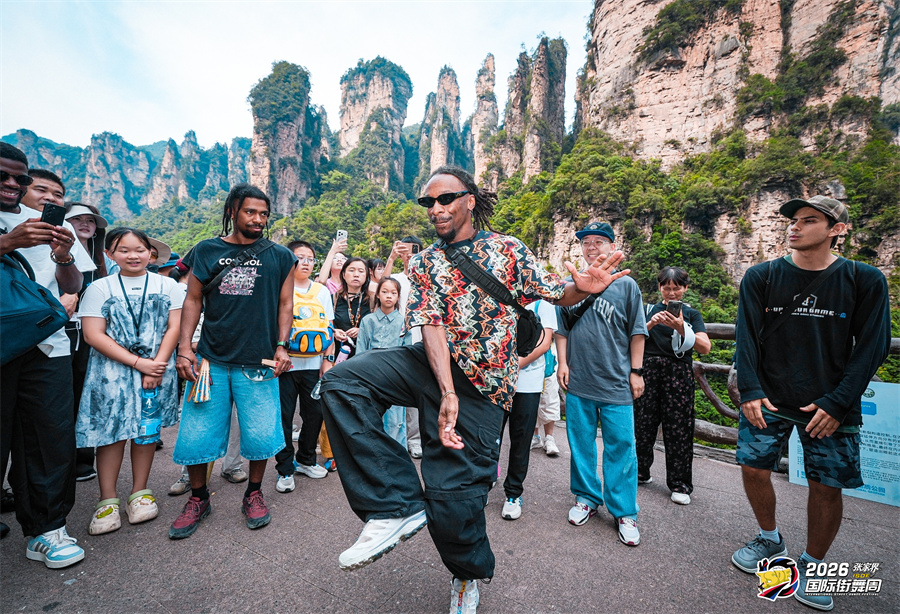
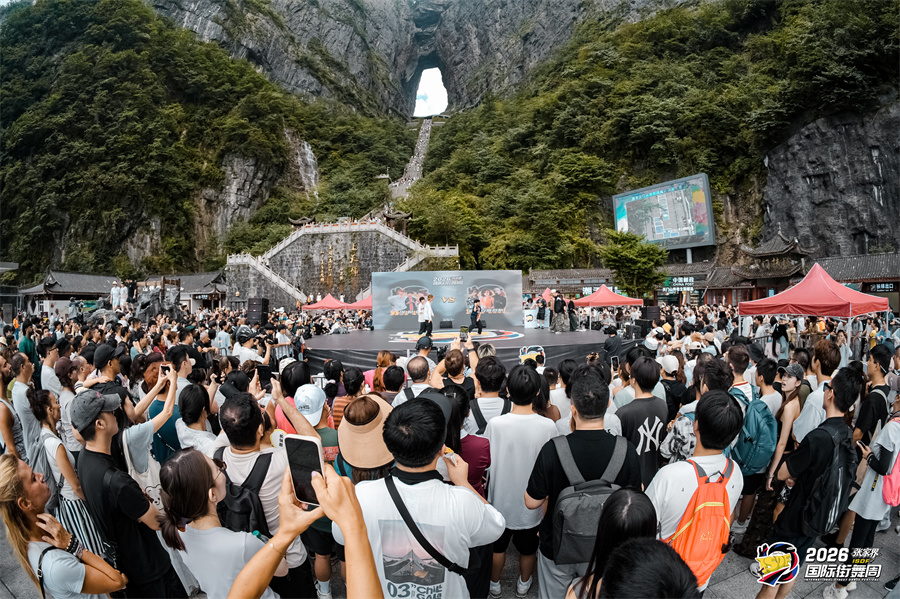
When street dancers from around the world arrived in Zhangjiajie, Hunan province, they found a stage unlike any other — framed by towering sandstone peaks, mist-shrouded mountains and some of China's most spectacular natural scenery.
The 2026 Zhangjiajie International Street Dance Week, held from Aug 17 to 20, brought together more than 1,000 dancers, industry professionals and young cultural representatives from 14 countries and regions, turning the city's landmarks and public spaces into stages for contemporary street culture.
The event integrated street dance with Zhangjiajie's tourism and cultural attractions, creating an unusual mix of international youth exchange, urban culture and immersive tourism.
Four major styles: breaking, hip-hop, popping and locking, featured dancers from China and overseas, International crews faced off in team battles, while dancers presented original choreography. Open classes led by prominent street dancers also brought professional training and cultural exchange into public and tourism spaces.
For US dancer Boogie Smurf, the experience offered both an unforgettable view and a chance to connect.
"Street dance itself is a connection," he said. "It has no borders and no age limit. People from different cultural backgrounds stand together because of a shared passion, and build connections through music and dance."
That spirit was at the heart of the event. Improvisation and teamwork during battles, professional exchanges in master classes and face-to-face encounters among young people from different countries created an atmosphere in which cultural differences became a starting point for interaction rather than a barrier.
The event culminated in a gala combining dance battles, performances and other forms of cultural expression.
"Street dance has always developed by breaking boundaries," said Xia Rui, the event organizer and deputy director of the China Hip-Hop Union Committee, founded by the China Dancers Association in 2013. "We hope to break the limitations of traditional stages, bringing dance into the mountains and cities and allowing more spaces to become new platforms for creativity and exchange."
For Zhangjiajie, the festival offered a new way to combine its tourism appeal with contemporary youth culture. The mountains provided a dramatic backdrop for street dance, while the energy and creativity of the dancers brought a distinctly youthful pulse to the city.